


If you’re planning a trip to Istanbul, don’t leave your airport transportation up to chance. When you book a shuttle ahead of time, you can skip the stress and start your vacation off right.
We provide safe and comfortable transfer from Bolu to any location in Turkey. Istanbul Airports transfers provided by Istanbul Elite Transfer are unlike any typical Istanbul taxi or shuttle services. Using a taxi service, it is highly possible that you will find the taxi unclean, uncomfortable, unsafe and with expensive prices. Our operational philosophy is to provide safe and comfortable transfer without having any hidden costs. We do not charge any additional payment due to flight delay or traffic congestion. It is also diffucult and exhausting to get to any location by metro, by airport shuttles or by any other public transportations. Using our services will make your stay comfortable and will guarantee your piece of mind.
At IstanbulEliteTransfer, we offer a variety of flexible transportation options for Bolu, so you can ride your way. If you need any ride in Istanbul you can count on, we can help.
We are ready to shuttle you to where you want to go. From Hotel to Airport, from Sea Port to Hotel. Book a valuable transportation service today.
About Bolu
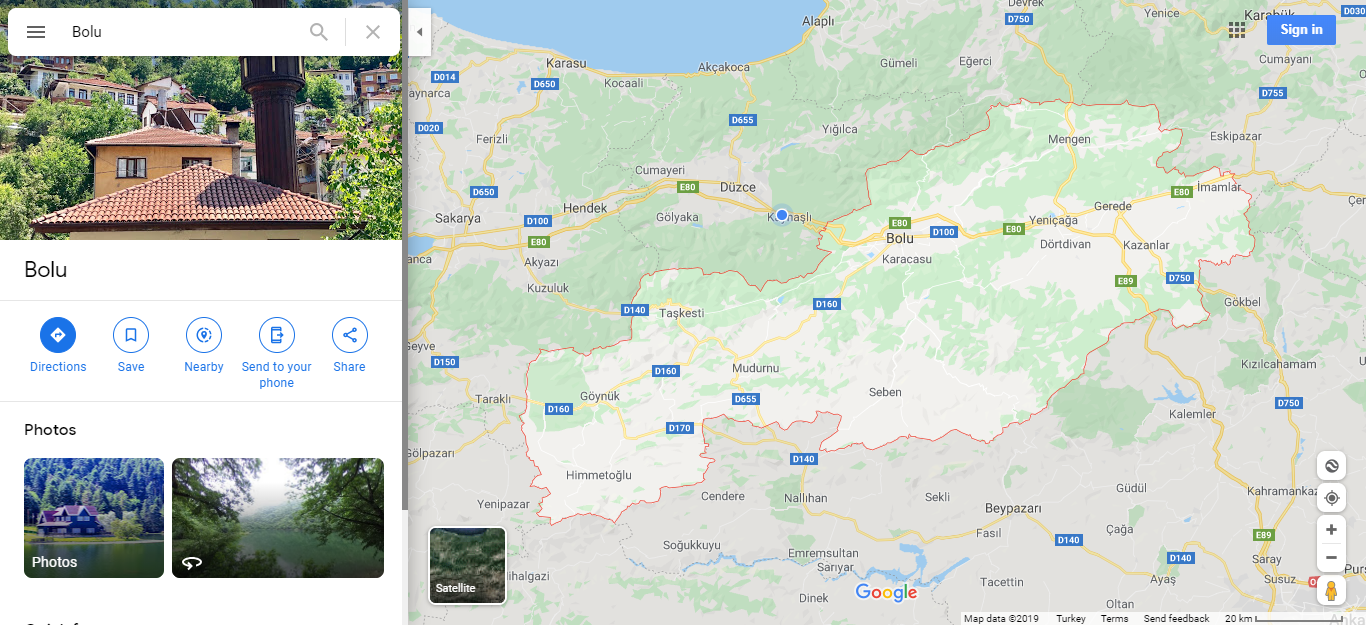
Bolu is a city in Turkey, and administrative center of the Bolu Province. The population is 131,264 (2012 census).[3]
The city has been governed by mayor Alaaddin Yılmaz (AK Party) since local elections in 2004. It was the site of Ancient Claudiopolis and has also been called Eskihisar (“old fortress”) (and as such has several Turkish namesakes).
Bolu is on the old highway from Istanbul to Ankara, which climbs over Mount Bolu, while the new motorway passes through Mount Bolu Tunnel below the town.
Bolu is a city in Turkey, and administrative center of the Bolu Province. The population is 131,264 (2012 census).[3]
The city has been governed by mayor Alaaddin Yılmaz (AK Party) since local elections in 2004. It was the site of Ancient Claudiopolis and has also been called Eskihisar (“old fortress”) (and as such has several Turkish namesakes).
Bolu is on the old highway from Istanbul to Ankara, which climbs over Mount Bolu, while the new motorway passes through Mount Bolu Tunnel below the town.
In 1325, the town was conquered by the Ottoman Empire, becoming known under the present Turkish name (sometimes called Bolou or Boli). It was also ruled by Candaroğlu between 1402 and 1423. It became the chief town of a sanjak in the vilayet (province) of Kastamonu and had a population of 10,000 inhabitants. In the late 19th and early 20th century, (after 1864 with Vilayetler Nizannamesi) Bolu was part of the Kastamonu Vilayet of the Ottoman Empire. Bolu was an Ottoman state ( eyalet ) until Vilayetler Nizannamesi 1864 and was covering from Beykoz kazasi of İsmid Sanjak to Boyabat kazasi of Sinop Sanjak.
Ecclesiastical history
(Arch)Bishopric
As secular capital of the Roman province of Honorias, in the civil Diocese of Pontus, the bishopric of Claudiopolis became the metropolitan see, in the sway of the Patriarchate of Constantinople, with five suffragan sees : Heraclea Pontica, Prusias ad Hypium, Tium, Cratia and Hadrianopolis in Honoriade. It appears as such in the Notitiae Episcopatuum of Pseudo-Epiphanius of about 640 and in that of Byzantine Emperor Leo VI the Wise of the early 10th century, ranking sixteenth viz. seventeenth among the Patriarchate’s Metropolitans.
The city, known as Hadrianopolis (like many other) under Byzantine rule fell to Turkmens migrating west in the 11th century who called it Boli, was recaptured by Byzantines in 1097, besieged unsuccessfully by the Sultanate of Rum in 1177 and reconquered in 1197. Under Ottoman rule since the 14th century it lost to Heraclea Pontica the Metropolitan dignity. It ceased to exist as a residential bishopric in the 15th century.
Michel Lequien mentions twenty bishops of the see to the 13th century; documentary mentions are available for the following incumbent (Arch)bishops :
- the first is St. Autonomus, said to be an Italian missionary who suffered martyrdom under Diocletian.
- Callicrates (menztioned in 363 in Socrates Scolasticus‘ church history)
- Gerontius (first actual historically documented bishop, in 394 attending the council against Metropolitan Bagadius of Bosra.
- Olympius (in 431)
- Calogerus (449 – 458)
- Carterius (menzionato nel 459)
-
- Hypatus (circa 518 )[dismissed by Janin]
-
- Epictetus (in 536)
- Vincentius (in 553) [dismissed by Janin]
- Ciprianus I (in 680)
- only Janin also includes a bishop Sisinnius, attending the council in Trullo (692), but assgns apparently the same to namesake see Claudiopolis in Isauria
- Nicetas I (in 787)
- Ignatius, a friend and correspondent of Patriarch Photios I of Constantinople
- Ciprianus II (869 – 879)
- Nicetas II (10th-11th centuries) [6]
- John (1028 – 1029).
Titular see
The archdiocese was nominally restored by the Catholic Church as a Latin Metropolitan titular archbishopric no later than the seventeenth century, first named Claudiopolis (Latin) / Claudiopoli (Curiate Italian), renamed in 1933 as Claudiopolis in Honoriade (Latin) / Claudiopoli di Onoriade (Italiano) / Claudiopolitan(us) in Honoriade (Latin).[7]
It is vacant, having had the following incumbents:
- Alfredo Bruniera (1954.12.12 – 2000.03.26)
- Alain Guynot de Boismenu, Sacred Heart Missionaries (M.S.C.) (1945.01.18 – 1953.11.05)
- Georges-Prudent-Marie Bruley des Varannes (1924.02.13 – 1943.05.29)
- Giuseppe Fiorenza (1905.12.11 – 1924.01.27)
- Giovanni Battista Bertagna (1901.03.26 – 1905.02.11)
- Joseph-Adolphe Gandy, M.E.P. (1889.01.15 – 1892.09.29)
- Eugène-Jean-Claude-Joseph Desflèches (范若瑟), Paris Foreign Missions Society (M.E.P.) (1883.02.20 – 1887.11.07)
- Carlo Gigli (1880.12.13 – 1881.08.24)
- Stephanus Antonius Aucher (1796.07.05 – ?)
- Tommaso Battiloro (1767.11.20 – 1767.12.14)
- Titular Bishop: Joannes Nicastro (1724.09.11 – ?)
- Titular Bishop: Walenty Konstantyn Czulski (1721.02.12 – 1724.02.10?)
- Titular Bishop: Piotr Tarło (1713.01.30 – 1720.12.16)
- Jean-Baptiste Adhémar de Monteil de Grignan (1667.08.03 – 1689.03.09)
- Titular Bishop: Tomás de Paredes, Augustinians (O.E.S.A.) (1652.10.14 – 1667.02.17)
Places of interest
The countryside around Bolu offers excellent walking and other outdoor pursuits. There are hotels in the town. Sights near the town include:
- The 14th-century mosque, Ulu Jamii.
- Bolu Museum holding artifacts from Hittite, Roman, Byzantine, Seljuk and Ottoman periods.
- The hot springs Kaplıcalar.
- Lake Abant and village of Gölköy, near the university campus.
- The famous crater lake called Gölcük.
Culture
Architecture and sights
Bolu is home to examples of Ottoman architecture. The Grand Mosque dates to 1899, but was originally built by Bayezid I and is home to decorations that resemble embroideries.[8] The Kadı Mosque is perhaps the best example of classical Ottoman architecture in the city, having been built in 1499 and having its entrance embroidered with ornate kündekari works.[9][10] Other Ottoman mosques in the city include the İmaret Mosque, built in the 16th century,[11] Saraçhane Mosque, built in 1750, Ilıca Mosque, built in 1510-11, Karaköy Cuma Mosque, built in 1562-63 and Tabaklar Mosque, built in 1897.[9]
The remains of the ancient city of Bithynium have been found in four hills in the city centre, Kargatepe, Hisartepe, Hıdırlıktepe and the Uğurlunaip Hill. In Hıdırlıktepe, a tomb and the remains of a theatre have been uncovered. In Hisartepe, a temple believed to have been built by the Roman emperor Hadrian for his lover Antinous has been excavated.[9] In 1911, it was noted that “in and around [Bolu] are numerous marbles with Greek inscriptions, chiefly sepulchral, and architectural fragments.”[12]
Bolu Museum was established in 1975 to display and protect artifacts found in the Bolu area. It functions as both an archaeological and an ethnographic museum and is home to 3286 archaeological and 1677 ethnographic artifacts, as well as 12,095 historical coins. The archaeological artifacts chronicle the history of the area from Neolithic to Byzantine eras.[13]
Cuisine
Local specialities include a sweet made of hazelnuts (which grow in abundance here) and an eau-de-cologne with the scent of grass. One feature of Bolu dear to the local people is the soft spring water (kökez suyu) obtained from fountains in the town.
Media
Bolu is home to 12 local newspapers published in the city centre, two local TV channels (Köroğlu TV and Abant TV), three local radio stations and six local magazines.[14]
Economy
Bolu is a busy market town rather than a large city. It has one long shopping street and an attractive forested mountain countryside. Students from the university and soldiers based in Bolu make an important contribution to the local economy, which traditionally depended on forestry and handicrafts. Market day is Monday, when people from the surrounding villages come into town for their weekly shop.
The main road from Istanbul to Ankara used to cross Bolu mountain, although more people would stop at the roadside restaurants than actually come into the town, and anyway now the Mount Bolu Tunnel is open most people will rush by on the motorway rather than climb up into Bolu, especially in winter when the road has often been closed due to ice and snow. Some of the service stations on the mountain road have already announced their closure or moved elsewhere.
Climate
Bolu has an oceanic climate (Köppen climate classification Cfb), with cold and snowy winters and warm summers with cool nights. Unlike the low-lying, sheltered city center, many parts of the province, like Gerede, have a humid continental climate (Dfb), due to very cold winters. January mean temperature is 0.7 °C, and temperatures rarely rise more than 12.3 °C and rarely drop below -15.0 °C during winter months. July mean temperature is 19.9 °C and temperatures rarely drop below 8.3 °C and rarely rise up to 32.2 °C in summer months. Lowest temperature recorded is -34 °C (-29.2 °F) in February 1929, and the highest was 39.8 °C (103.6 °F) in August 2006. Record snow thickness was 72 cm (28.3 inches) in February 1950. Bolu is a usually cloudy and foggy city and annual sunshine hours are about to be 1,600.Bolu’s climate is similar to Budapest‘s climate.